





- 05 Feb, 2026
- Artificial Intelligence
- Product & Strategy
- By Musketeers Tech
Best ChatGPT Prompts for Business Analysis and Techniques
Business analysis work moves fast: discovery calls pile up, requirements change weekly, and stakeholders want clarity now. Used well, ChatGPT prompts for business analysis can help you turn messy inputs into structured outputs like interview questions, user stories, acceptance criteria, SWOT summaries, process improvements, and executive-ready briefs.
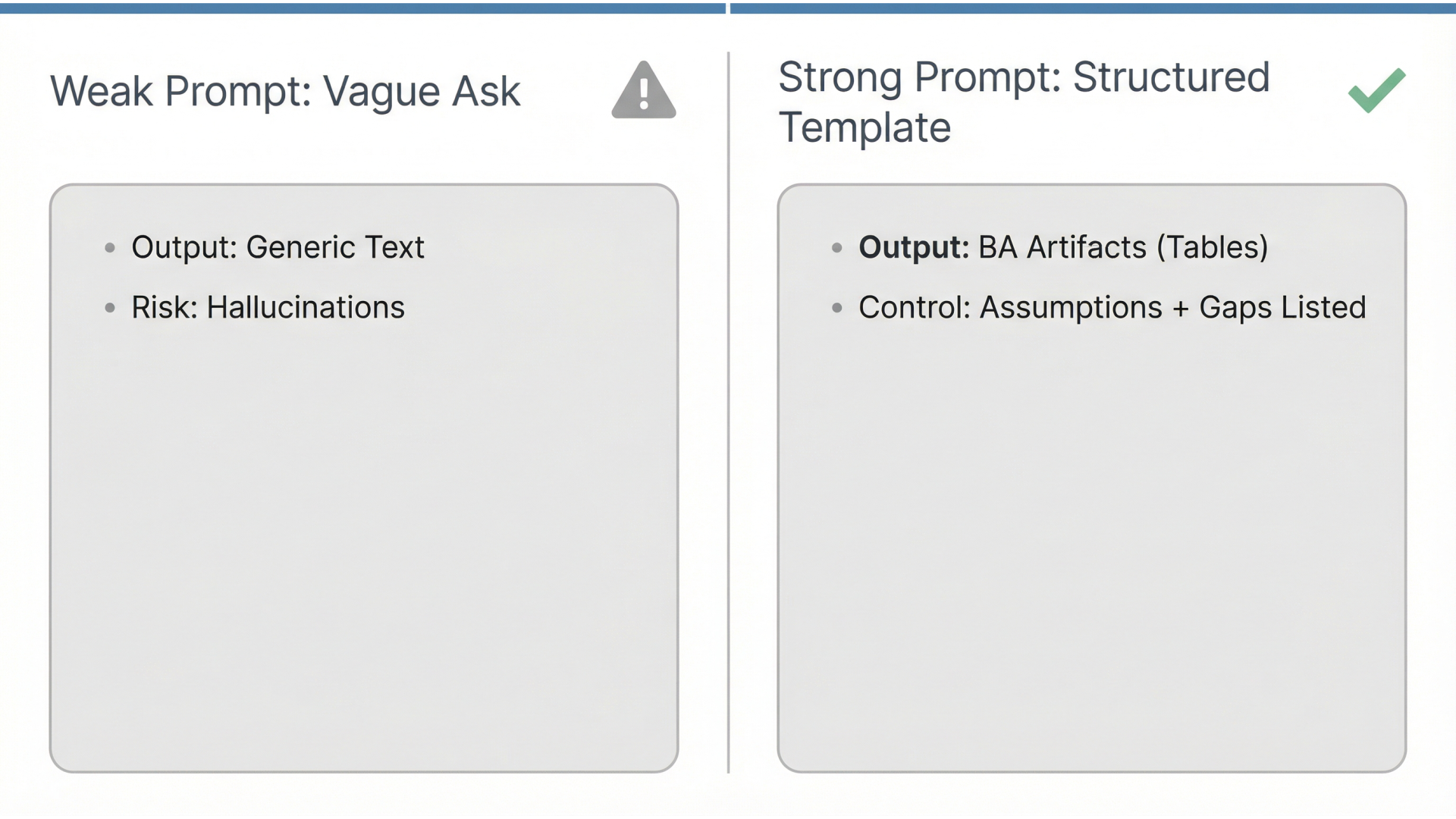
But “write me requirements isn’t a strategy. The difference between useful vs risky AI output is usually the prompt: what context you provide, what constraints you set, and how you ask for verification. In this guide, you’ll get a practical prompt-engineering template (so you can reuse it across projects), plus a curated prompt library for the most common BA tasks from requirements gathering to stakeholder communication.
If you’re building GenAI into your workflow (or into a product), this is also the playbook for making prompts repeatable, auditable, and safe.
What Are ChatGPT Prompts for Business Analysis? (And how to use ChatGPT for business analysis)
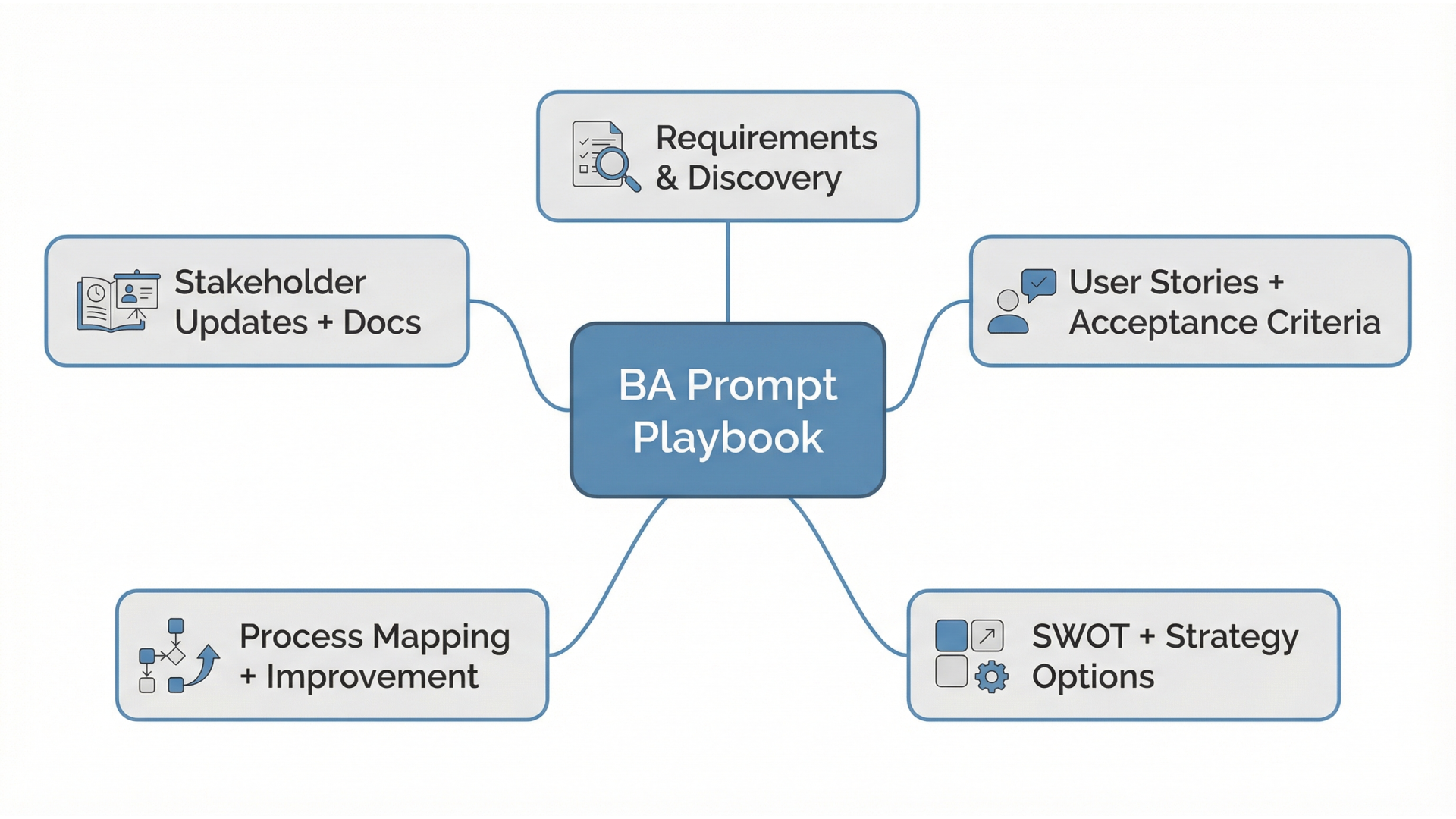
A prompt is the instruction you give an AI model plus the context needed to produce a reliable output. In business analysis, prompts are most valuable when they generate structured artifacts (not just paragraphs), such as:
- Interview guides and discovery questions
- Problem statements, scope boundaries, and assumptions
- User stories, use cases, and acceptance criteria
- SWOT, competitor summaries, and strategy options
- Process mapping steps and improvement opportunities
- Meeting summaries and stakeholder-specific write-ups
To use ChatGPT effectively for BA work:
- Provide context (industry, product, users, constraints).
- Specify the artifact you want (e.g., Write 8 user stories in a table).
- Set quality rules (no invented facts, flag missing info, include risks).
- Iterate (treat the first output as a draft, then refine).
Protect sensitive data
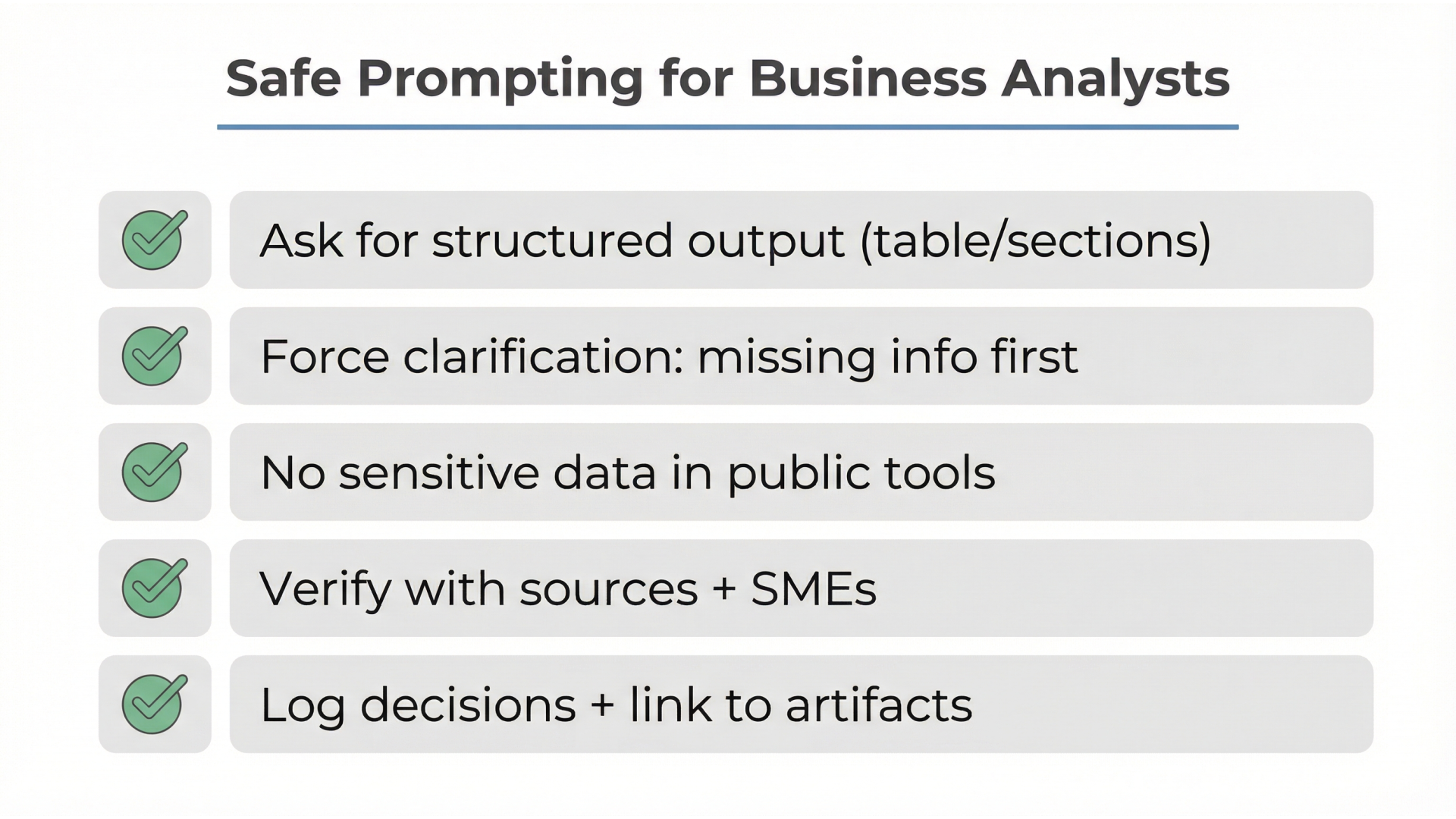
Avoid pasting PII, customer data, or confidential docs into public tools. If you need to ground answers in internal knowledge, use a private deployment or RAG setup. See our guide on training ChatGPT on your own data.
Why ChatGPT Prompts Matter for Business Analysts (Benefits + limitations)
When prompts are well-designed, AI can speed up repetitive BA tasks and improve consistency:
- Faster first drafts: Convert raw notes into structured stories, summaries, or questions.
- Better coverage: Generate alternative flows, edge cases, risks, and acceptance criteria you might miss.
- Clearer communication: Rewrite the same update for executives vs engineering vs support.
- Standardization: Reusable prompt templates can enforce your team’s “definition of ready.”
Where you still need human judgment:
- Accuracy and traceability: AI can hallucinate. Treat output as suggestions until verified.
- Domain nuance: Stakeholder politics, constraints, and edge cases require context.
- Security/compliance: Sensitive requirements and customer data must be protected.
A good rule: use AI to accelerate thinking and formatting, not to replace validation.
Prompt Engineering for Business Analysts: The 5-Part Template
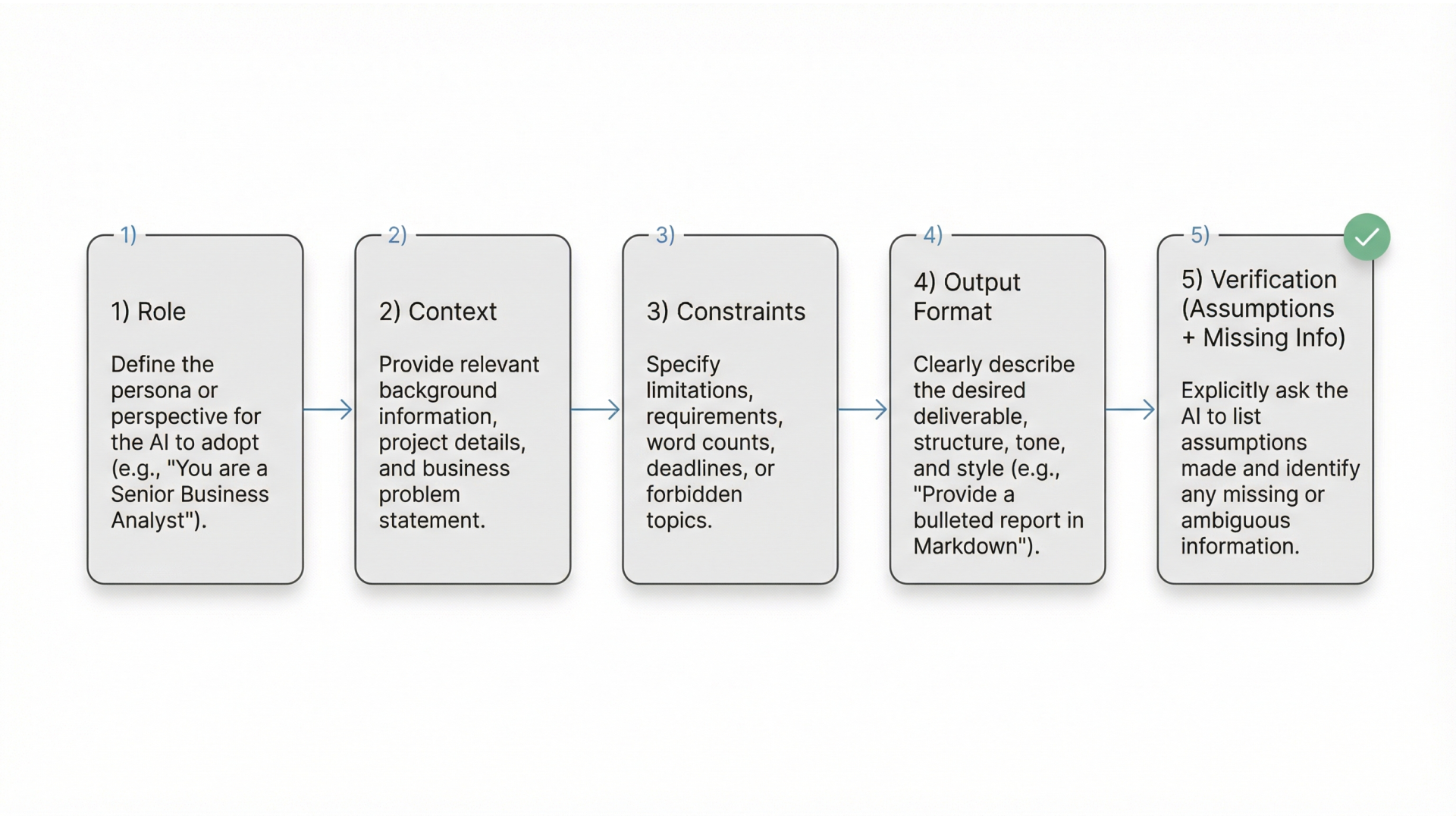
Most prompt engineering for business analysts boils down to one repeatable pattern. Use this 5-part template as your default:
- Role: Who should the model act as?
- Context: What’s the project, users, goal, and constraints?
- Task: What do you want created?
- Output format: Table? bullets? sections? include examples?
- Verification: Ask it to list assumptions, risks, and missing inputs.
The Role Context Constraints Output Examples pattern
Copy/paste this template:
You are acting as a senior business analyst in [industry/domain].

Context:
- Product/service: [what it is]
- Target users: [who]
- Business goal: [goal]
- Constraints: [budget/timeline/compliance/tech stack]
- Current problem: [pain points]

Task:
Create [artifact] to help with [BA activity].

Output format:
- Use [table/bullets/sections]
- Include [N] items
- Include edge cases and non-functional requirements where relevant

Verification:
- List assumptions you made
- List missing information you need from me
- Flag any statements that would require confirmation
Why this works
This pattern forces specificity, reduces vague outputs, and creates a built-in QA step so you can trust and reuse results across projects.
Best ChatGPT Prompts for Business Analysis (Prompt Library)
Below is a practical library you can use as-is. Each prompt is designed to produce a BA artifact, not generic advice.
Requirements gathering & discovery (stakeholders + scope)
1) Stakeholder interview guide
You are a business analyst. Create an interview guide for a 30-minute discovery call.

Context:
- Domain: [e.g., fintech]
- Feature: [e.g., dispute management]
- Stakeholder role: [e.g., support lead]

Output:
- 12 questions grouped into: goals, current workflow, pain points, data, compliance, success metrics
- Add 3 follow-up questions for ambiguous answers
Verification:
- List assumptions + missing inputs
2) Requirements elicitation from notes
Turn these meeting notes into structured requirements.

Notes:
[paste bullet notes]

Output:
- Functional requirements (FR) list
- Non-functional requirements (NFR) list
- Open questions
- Risks/dependencies
Constraints:
- Do not invent facts; if unclear, mark as "needs confirmation"
3) Define scope boundaries
Create an in-scope / out-of-scope statement for this initiative.

Context:
- Objective: [objective]
- Users: [users]
- Timeline: [timeline]

Output:
- In scope (5-8 bullets)
- Out of scope (5-8 bullets)
- Assumptions
- Dependencies
User stories, use cases & acceptance criteria
4) User stories in a table
Write user stories for this feature: [feature description].

Output table columns:
- Epic
- User story (As a... I want... so that...)
- Acceptance criteria (Given/When/Then)
- Priority (MoSCoW)
- Notes / open questions

Constraints:
- Include at least 2 edge-case stories
5) Acceptance criteria expansion
Expand acceptance criteria for this user story:
[user story]

Output:
- 8-12 Given/When/Then statements
- Include error handling, permissions, and empty states
Verification:
- List any missing business rules you need
6) Use case + alternate flows
Create a use case for: [scenario].

Output sections:
- Actors
- Preconditions
- Main flow (numbered)
- Alternate flows (at least 3)
- Postconditions
- Business rules
- Data captured
SWOT + business strategy analysis
7) ChatGPT prompts for SWOT analysis business
Act as a strategy analyst. Build a SWOT analysis for [company/product] in [market].

Context:
- Target customers: [segment]
- Differentiators: [bullets]
- Known competitors: [list]

Output:
- SWOT table with 5 items each
- 3 strategic recommendations based on SWOT
Verification:
- Flag any assumptions or missing market data
8) Strategy options with trade-offs
Generate 3 business strategy options to achieve this goal:
[goal]

For each option include:
- What we do
- Pros/cons
- Cost/time estimate (low/med/high)
- Key risks
- KPIs to track
Constraint:
- Keep recommendations realistic for a team of [team size] over [timeline]
Business process mapping & improvement
9) chatgpt prompts for business process mapping
Create a process map in text form for the workflow below:
[workflow description]

Output:
- Actors/roles
- Steps (1..N)
- Inputs/outputs per step
- Decision points
- Common failure points
Then:
- Suggest 5 improvements with expected impact and complexity
10) SOP draft
Draft a Standard Operating Procedure (SOP) for: [process].

Output:
- Purpose
- Scope
- Definitions
- Step-by-step procedure
- Exceptions/escalations
- Compliance notes
Verification:
- List what must be validated with SMEs
Data analysis & insight storytelling (BA-friendly)
11) Analysis plan
Create a lightweight analysis plan for this question:
[question]

Context:
- Available data sources: [sources]
- Constraints: [privacy/tools]

Output:
- Hypotheses (3-5)
- Metrics to compute
- Segments to compare
- Visualizations to create
- Pitfalls/bias to watch
12) Executive summary from findings
Rewrite these findings for an executive audience:
[paste findings]

Output:
- 5-bullet exec summary
- Business impact (revenue/cost/risk)
- Recommendation + next steps
Constraints:
- No technical jargon; quantify where possible
Stakeholder communication & documentation
13) Stakeholder-specific update
Create two versions of a project update from this info:
[bullets]

Version A: for executives (short, outcomes, risks)
Version B: for engineering (details, decisions needed, blockers)
Output:
- Max 150 words each
14) Decision log entry
Turn this conversation into a decision log entry:
[paste notes]

Output fields:
- Decision
- Date
- Participants
- Options considered
- Rationale
- Impacts
- Follow-ups / owners
Best Practices & Common Mistakes (So your prompts hold up in real projects)
- Ask for structured outputs (tables, numbered steps, schemas).
- Force clarification: List missing info before answering.
- Make it cite the source: Only use facts from the pasted text; quote lines.
- Add a risk scan step: List edge cases, security, compliance impacts.
- Iterate with constraints: Revise using only these business rules.
Common mistakes to avoid
- Vague asks without defining what good looks like.
- Trusting output without verification (especially numbers, policies, market claims).
- Mixing sensitive data into public prompts.
- Skipping the audience: exec vs PM vs engineer needs different formats.
Quick QA checklist
Before I use this output, check:
- What assumptions did you make?
- What must be verified with SMEs or source docs?
- What edge cases are missing?
- What risks exist (privacy, compliance, operational)?
- What decisions does the team still need?
Tools & Workflows to Use Prompts Safely in Real Teams
If you want prompts to be reliable across a team (not just for one power user), build a simple workflow:
- Prompt repository: store approved templates by artifact (requirements, stories, SWOT).
- Review step: BA/PM validates logic; engineering validates feasibility.
- Traceability: link AI outputs back to source docs (PRD sections, meeting notes).
- Private knowledge (RAG): enable answers grounded in your internal docs instead of guesses.
This is where teams move from cool experiments to real leverage. If you’re planning to embed GenAI into internal ops or a customer-facing product, our Generative AI Application Services can help you design secure, grounded workflows.
How Musketeers Tech Can Help
If you’re getting value from these ChatGPT prompts for business analysis but want results that are consistent, secure, and scalable, we can help you turn prompt ideas into production workflows.
At Musketeers Tech, we build GenAI systems that connect to your real sources of truth (product docs, SOPs, tickets, knowledge bases) so your team isn’t relying on guesswork. That includes RAG-based assistants, internal copilots for requirements and documentation, and automation agents that draft artifacts directly into tools like Jira or Confluence.
For example, we’ve delivered AI-driven assistants and interactive AI experiences across industries, work you can explore in our portfolio. If you’re early-stage, we can also package this into a fast, testable rollout via MVP development.
Learn more about our AI Agent Development or explore our Generative AI Application Services.
AI Agent Development
Automate BA tasks, requirements drafting, decision logs, and status updates with secure, compliant AI agents.
Generative AI Apps
Private RAG, grounded copilots, and BA workflows integrated with Jira/Confluence, built for enterprise readiness.
Frequently Asked Questions (FAQs)
Use ChatGPT to draft structured BA outputs (interview questions, user stories, acceptance criteria, summaries) by providing role, context, constraints, and a specific output format. Always ask it to list assumptions and missing info, then validate results with stakeholders and source documents.
Final Thoughts
The fastest way to get value from ChatGPT prompts for business analysis is to stop asking for generic analysis and start requesting specific BA artifacts with clear constraints and verification. Use the 5-part template (role, context, task, output format, QA checks), then pull from the prompt library for requirements, user stories, SWOT, process mapping, and stakeholder communication.
As your team scales, consistency and safety matter more than clever prompts. Standardize templates, build a review step, and ground outputs in trusted documentation especially if you’re using AI across multiple projects, teams, or clients.
Need help operationalizing GenAI for BA workflows? Check out our Generative AI Application Services or explore our recent projects.
Related Posts:
- chatgpt-prompts
- business-analysis
- prompt-engineering
- requirements-gathering
- generative-ai
